I learned one of my earliest lessons about branding while working at Subway in high school. I just didn’t know that was what I was learning at the time.
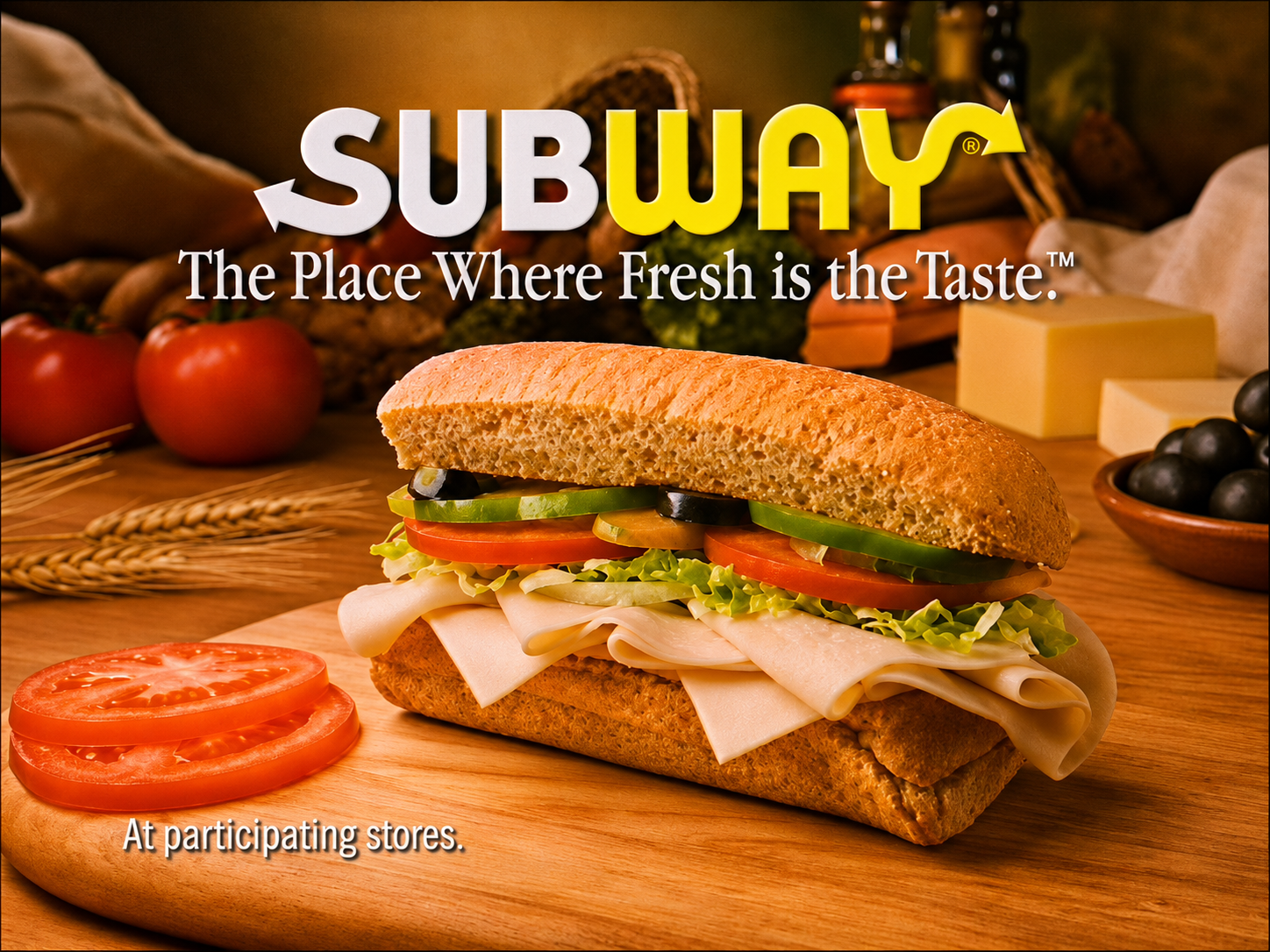
Every day, I stood behind a counter surrounded by photographs of sandwiches that looked almost perfect. The bread was cut neatly. The meats and cheeses were layered with intention. The vegetables were arranged so you could actually see them. Everything looked fresh, full, balanced and appetizing.
Then I would look down at the sandwich I had been trained to make.
It wasn’t necessarily bad. It just didn’t look like the sandwich on the menu.
That bothered me.
The gap between the picture and the product
I started paying closer attention to the advertising. If this was the sandwich the company was showing people, why weren’t we making sandwiches that looked like that?
Between customers, when things slowed down, I would practice. I experimented with how I cut the bread, how I placed the meat and cheese, and how I arranged the toppings. I was trying to figure out how to make the sandwich in my hands look more like the sandwich customers had just seen above my head.
I wasn’t trying to reinvent Subway. I wasn’t thinking about marketing strategy or customer experience. I was a high school kid who thought the finished product should look like the picture.
Eventually, after enough practice, I decided to make a customer’s sandwich using the approach I had developed.
They watched me the entire time.
When I finished, they looked at the sandwich and said something I still remember years later: “I’ve never had anyone make my sandwich the way the pictures look. It’s beautiful.”
That reaction stayed with me because, in a strange way, the customer was surprised that they had received exactly what had been advertised to them.
Then something unexpected happened
I kept making sandwiches that way, and customers kept noticing.
They complimented the sandwiches. Some started asking for me specifically. And then people started leaving tips.
That got the attention of the other employees.
They began watching what I was doing and copying the approach. Soon, more of us were taking greater care in how we assembled and presented the sandwiches. Eventually, we had a tip jar out. Certain regular customers even developed preferences for particular employees because they knew those employees would make their sandwich the way they wanted it—or maybe more importantly, the way they had been shown it.
Looking back, the fascinating part is that we had not fundamentally changed the product. The ingredients were the same. The menu was the same. The restaurant was the same.
What changed was the experience of receiving it.
The sandwich suddenly felt more valuable because it looked like the sandwich the customer believed they were buying.
I didn’t know it yet, but that was branding
Years later, after working in design, marketing, brand strategy and creative leadership, I finally had language for what had happened behind that Subway counter.
There was a brand promise, and there was a customer experience.
The advertising established an expectation before the customer ever placed an order. It showed them what the product was supposed to look like. That image helped create desire. It made someone hungry. It gave them a reason to choose that restaurant, drive there, walk through the door and spend their money.
But once the customer arrived, the advertisement could no longer do the work.
The experience had to take over.
If the marketing is the promise, the actual experience is the truth.
And whenever there is a meaningful gap between those two things, customers feel it—even when they can’t articulate exactly what is wrong.
The customer ordered the picture
This is the part businesses sometimes underestimate.
A customer does not experience your marketing and your operations as two separate departments. They do not care that one team created the campaign and another team delivers the service. They experience one company.
They see the picture, and then they order the picture.
They read the website and expect the company described on the website. They see the photography and expect that level of quality. They hear the sales pitch and expect the experience that was sold. They read the values and expect employees to behave accordingly. They pay a premium price and expect every part of the experience to reinforce that premium position.
When those things align, the brand feels credible.
When they don’t, the customer begins to discover the distance between the company’s presentation and its reality.
That distance is where trust starts to erode.
Branding is not just about making the picture better
This is also why I have never believed branding is simply about logos, colors, fonts or advertising.
Those things matter. They shape perception, create recognition and communicate value. But they are only part of the job.
A beautifully designed brand can actually make an operational problem more obvious because stronger marketing creates a stronger expectation.
If the website says the company is responsive but nobody returns calls, the brand breaks.
If the photography communicates premium quality but the actual product feels careless, the brand breaks.
If the messaging talks about personal service but the customer feels processed, the brand breaks.
If a company presents itself as thoughtful, sophisticated and organized, but the sales or onboarding experience feels chaotic, the brand breaks.
The problem is not necessarily that the marketing is wrong. Sometimes the marketing is showing the company what it should become.
The challenge is making sure the rest of the organization can deliver it.
That lesson still shapes how I look at businesses today
When I work with a business now, I am rarely interested in changing something simply because it could look better.
I want to understand the larger gap.
What are customers being promised? What are they actually experiencing? Where is the company creating expectations it cannot consistently fulfill? Where is it delivering something better than its marketing gives it credit for? And what needs to change so that perception and reality start reinforcing one another?
Sometimes the answer is branding. Sometimes it is messaging. Sometimes it is the website, the sales process, customer service, the physical environment or the way the product itself is presented.
Often, it is a combination of several things.
That is because customers do not experience a brand in pieces. They experience the whole thing.
The sandwich was the lesson
I did not leave that high school job thinking I had discovered a philosophy about branding.
I just knew customers were happier when the sandwich in their hands looked like the sandwich they had been promised.
But the lesson stayed with me.
A company creates an image of itself long before the customer completes the transaction. Through advertising, design, messaging, photography and countless other signals, it tells people what to expect.
Then comes the moment when the customer finds out whether the promise was real.
For me, one of my earliest examples happened over a sandwich counter.
The customer had seen the picture. The picture made them hungry. They came in and ordered it.
All I did was make sure what they received looked like what they came for.
Years later, I understand that this is still some of the most important work a brand can do: close the distance between the promise and the experience.
Have a project in mind?
We help Middle Tennessee businesses build brands and websites that bring in the right customers. Let's talk about yours.
Start a Project