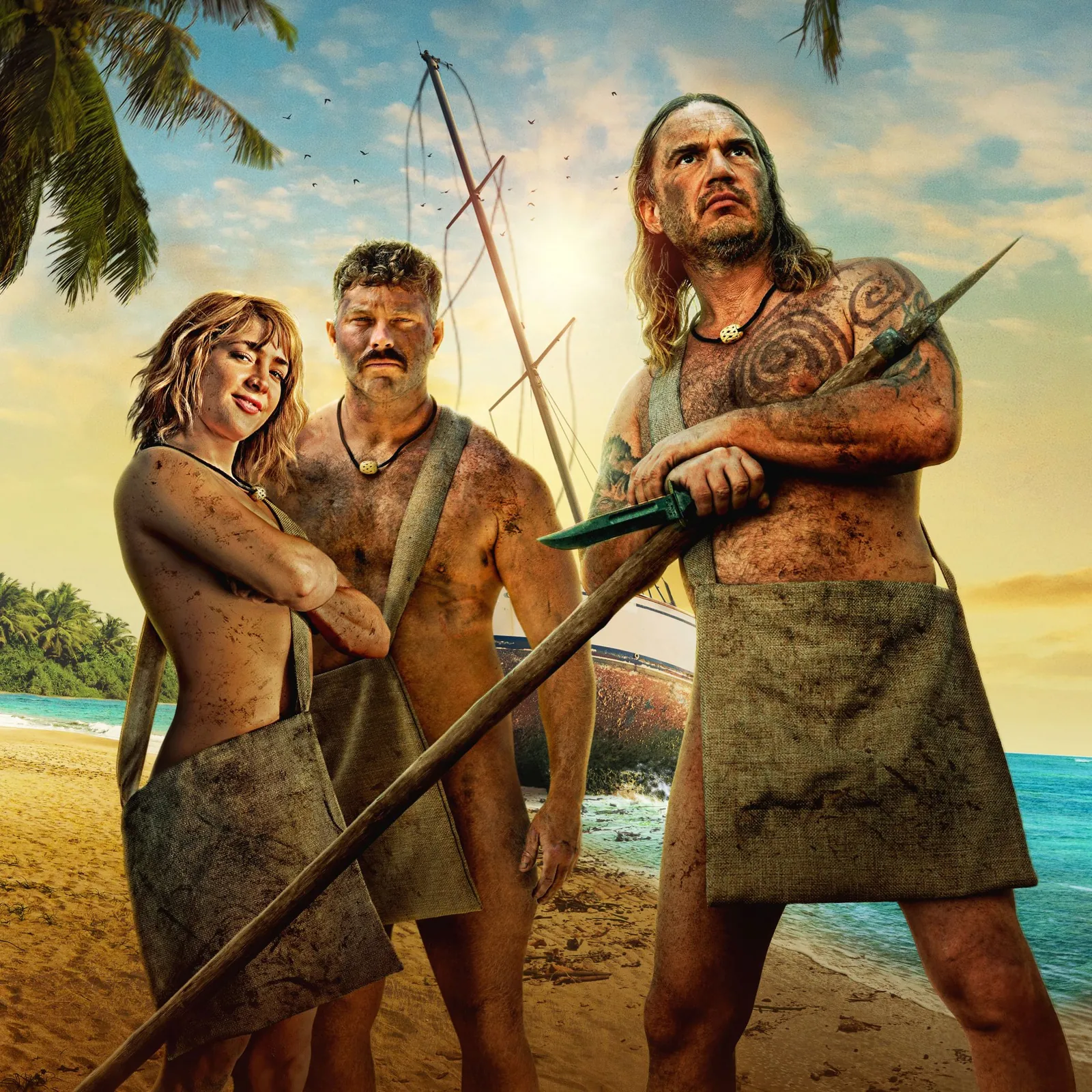
One of the things I find most interesting about Naked and Afraid is not simply whether the contestants make it to the end. It is how quickly the wilderness exposes the difference between knowing a few survival skills and knowing how to build a sustainable way of living.
Put people under enough pressure and patterns begin to emerge.
Some contestants are clearly in over their heads. Some survive, but barely. And then there are the ones who seem to figure out the environment, establish the fundamentals, work together, and eventually create something that almost resembles a functioning life.
I see the same patterns in business.
Most companies say they want to grow. They want more customers, better marketing, stronger systems, a clearer brand, better technology, more efficient operations, and fewer emergencies.
But wanting to thrive and having the capacity to build a thriving business are two very different things.
When a business is already fighting for air, the immediate problem almost always wins.
Survival changes the way you make decisions
Imagine being dropped into the wilderness with no shelter, no reliable water, no food, and weather moving in.
You are probably not thinking about where you want to be three weeks from now. You are thinking about tonight.
That is what survival mode does. It compresses your time horizon.
Businesses experience the same thing.
The website is not producing leads. Sales are down. A key employee left. Marketing has gone quiet. The CRM is a mess. Customers are confused. Competitors are gaining ground. Cash flow is tight.
Then someone like me comes along and starts talking about positioning, customer experience, operational alignment, technology, systems, content strategy, brand architecture, or the larger vision for what the company could become.
And the business owner is thinking, That sounds great, but I need this problem fixed now.
I understand that.
Sometimes you really do need to find water before you start designing the perfect shelter.
The problem is not the quick fix. The problem is when the quick fix becomes the entire strategy.
Triage can keep a business alive. It cannot become the business model.
There are businesses that are simply in over their heads
On survival shows, there is usually a contestant or team that arrives with confidence but quickly discovers that being good at camping is not the same as surviving in an unforgiving environment.
They may know how to start a fire in the backyard. They may have gone hunting. They may love the outdoors. But once they have to secure clean water, build shelter, manage hunger, navigate weather, conserve energy, and work with another person under pressure, everything begins to fall apart.
Some businesses operate the same way.
They were able to function when the company was smaller, the market was easier, the owner could personally oversee everything, or referrals were enough to keep work coming in.
Then conditions changed.
The company grew. Competitors improved. Customer expectations increased. Technology changed. Marketing became more complex. Employees needed clearer processes. The old website stopped working. The founder became a bottleneck.
What once looked like a marketing problem may actually be a capacity problem. What looks like a website problem may be a positioning problem. What looks like an employee problem may be a process problem.
The visible issue is real, but it is often only the part of the problem you can see above the surface.
Then there are businesses that survive
This is probably the most common group.
They make it.
They pay the bills. They keep customers. They retain enough employees. They launch the occasional campaign. They replace what breaks. They solve problems as they appear.
From the outside, they may even look successful.
But internally, survival consumes almost everything they have.
On Naked and Afraid, these are the teams living on the bare minimum. The shelter is good enough. There is just enough water. Food comes in small wins. Everyone is tired. A storm, injury, argument, or failed hunt can put the entire challenge at risk.
They complete the challenge, but they complete it exhausted.
Businesses can operate that way for years.
The owner makes every important decision. Employees are constantly working outside their roles. Marketing happens when someone has time. Temporary fixes quietly become permanent. Vendors solve disconnected problems. Nobody is quite sure what is working. There is no margin for experimentation, planning, or failure.
Some businesses survive, but survival consumes everything they have.
And when that becomes normal, surviving can start to feel like success.
The businesses that thrive operate differently
The strongest survivalists tend to approach the challenge differently.
They do not eliminate hardship. The wilderness is still the wilderness. The rain still comes. Food can still disappear. Plans still fail.
But they establish the fundamentals early.
They work as a team. They prioritize what matters. They build a shelter that can withstand weather instead of rebuilding it after every storm. They secure water. They protect the fire. They find dependable food sources. When they have abundance, they conserve it. They improve their environment instead of simply reacting to it.
Eventually, something changes.
They are no longer spending every waking moment trying not to fail.
They have created margin.
That is what thriving looks like in business too.
A thriving business is not a company with no problems. It is a company with enough foundation, knowledge, capacity, and resilience that every problem does not become an emergency.
Most quick fixes buy relief, not transformation
I have worked with enough organizations to know that many clients understand there is a larger opportunity.
They can see that the brand needs more than a new brochure. They know the website needs more than another patch. They know their marketing is inconsistent. They know the sales process depends too heavily on one person. They know the customer experience has gaps.
But the vision can feel expensive when the immediate pain is already expensive.
So they buy the smaller fix.
There is nothing inherently wrong with that. Sometimes the smaller fix is exactly what needs to happen first.
But a good quick fix should do more than remove today's pain. It should move the company one step closer to a better system.
If the same problem returns every six months, the business may not be solving the problem at all. It may simply be paying repeatedly to reset the clock.
The fix can work and the business can still end up back where it started
There is another part of this conversation that does not get enough attention.
Even when the fix works, can the organization maintain it?
A consultant can repair the process. An agency can redesign the website. A strategist can clarify the brand. A specialist can implement the technology. A marketing team can build the campaign.
Then what?
Who owns it after launch?
Who knows why the decisions were made? Who updates the content? Who watches the data? Who catches the small problems before they become large ones? Who trains the next employee? Who knows what not to change?
This is where many well-intentioned transformations begin to deteriorate.
The website slowly becomes outdated. Brand standards become suggestions. Content stops being published. The CRM fills with bad data. Employees invent workarounds. A carefully designed process turns back into a collection of habits.
The original solution may have been completely successful.
The organization simply never developed the ability—or the capacity—to sustain it.
There is a difference between being fixed and becoming capable.
Who keeps the fire burning?
A survivalist can be handed a fire, but that does not mean they know how to keep it alive.
Someone still has to gather wood. Protect it from rain. Notice when the flame is fading. Preserve an ember overnight. Know how to restart it when something goes wrong.
Businesses often invest heavily in getting the fire started and very little in keeping it burning.
For a solution to last, somebody needs ownership. The organization may need training, documentation, standards, dashboards, scheduled maintenance, clearer roles, or an ongoing outside partner.
And two different questions have to be answered:
- Does the team know how to maintain this?
- Does the team actually have the time and capacity to maintain it?
Those are not the same problem.
A company can have capable people who are already overloaded. Another can have available people who do not have the experience required to make good decisions. Some organizations have neither.
That is why sustainability has to be designed into the solution itself.
Not every company needs to bring every capability in-house. In fact, that can create a different kind of inefficiency.
Independence is not the goal. Resilience is.
A resilient business understands what it can own internally, what should be automated, where specialist expertise is still valuable, and how continuity will be maintained when people or conditions change.
Vision is not the opposite of practicality
When businesses are in survival mode, words like vision can sound abstract.
Vision can feel like something for companies with more money, more people, more time, and fewer immediate problems.
I think that definition misses the point.
Vision is not a beautifully written statement about where the company hopes to be in ten years.
It is the ability to see the business that could exist if today's recurring problems were no longer consuming so much of its energy.
What would happen if the website consistently supported sales instead of constantly needing rescue?
What if the brand established credibility before the first conversation?
What if marketing produced a predictable stream of useful information and opportunities?
What if employees did not have to remember every process because the processes were actually documented?
What if technology reduced repetitive work instead of adding another system people had to fight?
What could leadership focus on if it were not constantly being pulled back into emergencies?
That is not fantasy. That is capacity.
And creating capacity is often what makes growth possible.
Thriving starts with the fundamentals
The wilderness analogy is not perfect, but I think there is something useful in the way strong survivalists secure the basics before chasing everything else.
Businesses need their own version of shelter, water, fire, and food.
- Shelter: operational foundations that protect the company when conditions change.
- Water: reliable cash flow and a clear path to revenue.
- Fire: a brand, message, and sense of purpose people can rally around.
- Food: sustainable systems for attracting, serving, and retaining customers.
- Teamwork: leadership alignment, clear roles, communication, and coordinated execution.
When those fundamentals are weak, everything feels urgent.
When they are strong, the company gains options.
It can invest instead of constantly repair. It can experiment without betting the company. It can plan beyond the next month. It can recognize a problem while it is still small.
Most importantly, each improvement creates more capacity for the next one.
The best fix should leave the business stronger
There will always be times when a business needs outside help.
Thriving does not mean never hiring another consultant, agency, specialist, developer, strategist, or advisor.
It means those relationships should create more than dependency.
When I think about successful work, I do not only ask whether the immediate problem was solved. I also think about whether the organization is better equipped because we solved it.
Does the team understand the strategy? Is there a process they can follow? Is ownership clear? Can they recognize when performance is beginning to decline? Do they know when they can handle something internally and when they should bring in specialized help?
A thriving company is not one that never needs help again.
It is one that becomes more capable every time it receives help.
Fix what is urgent. Build toward what is possible.
I do not think businesses should ignore immediate problems in pursuit of some perfect future state.
If you need water, find water.
If the fire is out, relight it.
If the shelter is collapsing, stabilize it before the storm arrives.
But once the emergency passes, ask a bigger question: Why did this become an emergency in the first place?
Then ask what would have to change so the same problem is less likely to put the business at risk again.
That is where the work shifts from fixing to building.
And that is the difference I see between the businesses that spend year after year scavenging enough resources to complete the challenge and the ones that eventually create the conditions to thrive.
The environment does not necessarily get easier.
They simply become better prepared for it.
Have a project in mind?
We help Middle Tennessee businesses build brands and websites that bring in the right customers. Let's talk about yours.
Start a Project